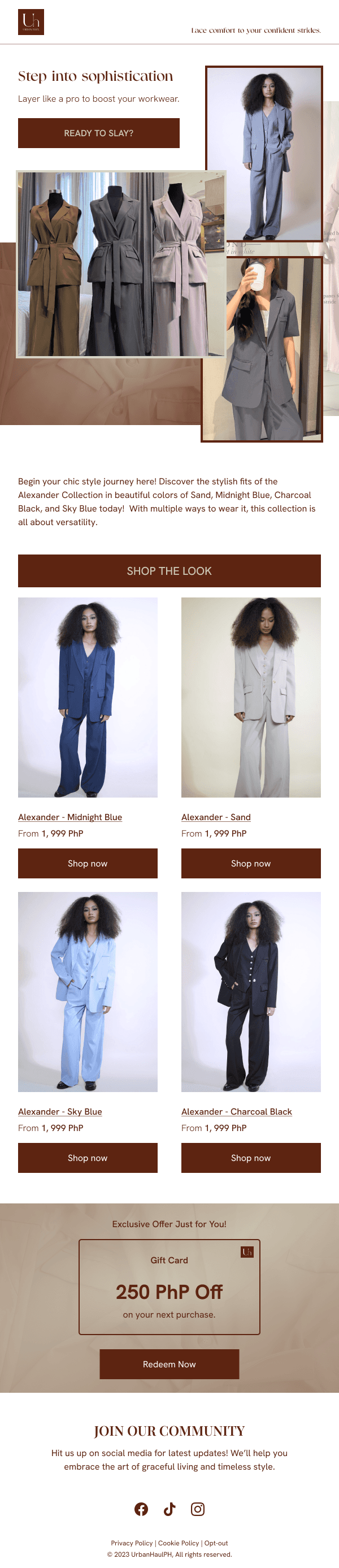

Fourth Street Cafe
Service Designer
1 Month
Fourth Street Café, in downtown Davao's quiet Narra Street, combines minimalist and escapist vibes. It offers espresso drinks, non-coffee beverages, and roasted beans, aiming to "pour happiness" into every cup. Operated by four baristas, it's open from 6 A.M. to 11 P.M., providing a serene escape for busy individuals.
Help explore the internal problems of the baristas and uncover the issues in the standard operating procedure of the service.
To produce a deeper understanding of the service carried out by the baristas, the following are the focus points:

In-Depth Interview & Affinity Diagram
Persona & Task Analysis
In-Depth Interview & Affinity Diagram
Service Blueprinting
Peak hours extend serving time to 2-3 minutes, with baristas multitasking - ordering, brewing, and cleaning, disrupting the cafe's oasis feel.
Peak hours strain efficiency, as baristas juggle various tasks. Management seeks to cut serving times and better distribute tasks.
The cafe seeks to improve budget efficiency and customer service by streamlining barista tasks, aiming for one-minute service and clear roles.
Before leaping at online presence, the team wants to understand the internal problems faced by the baristas, as well as uncover the issues of the standard operating procedure within the service.
The team will employ foundational or generative research techniques to explore the journey of the baristas as they engage in different roles at the start of their work, during, and at the end of their shift.
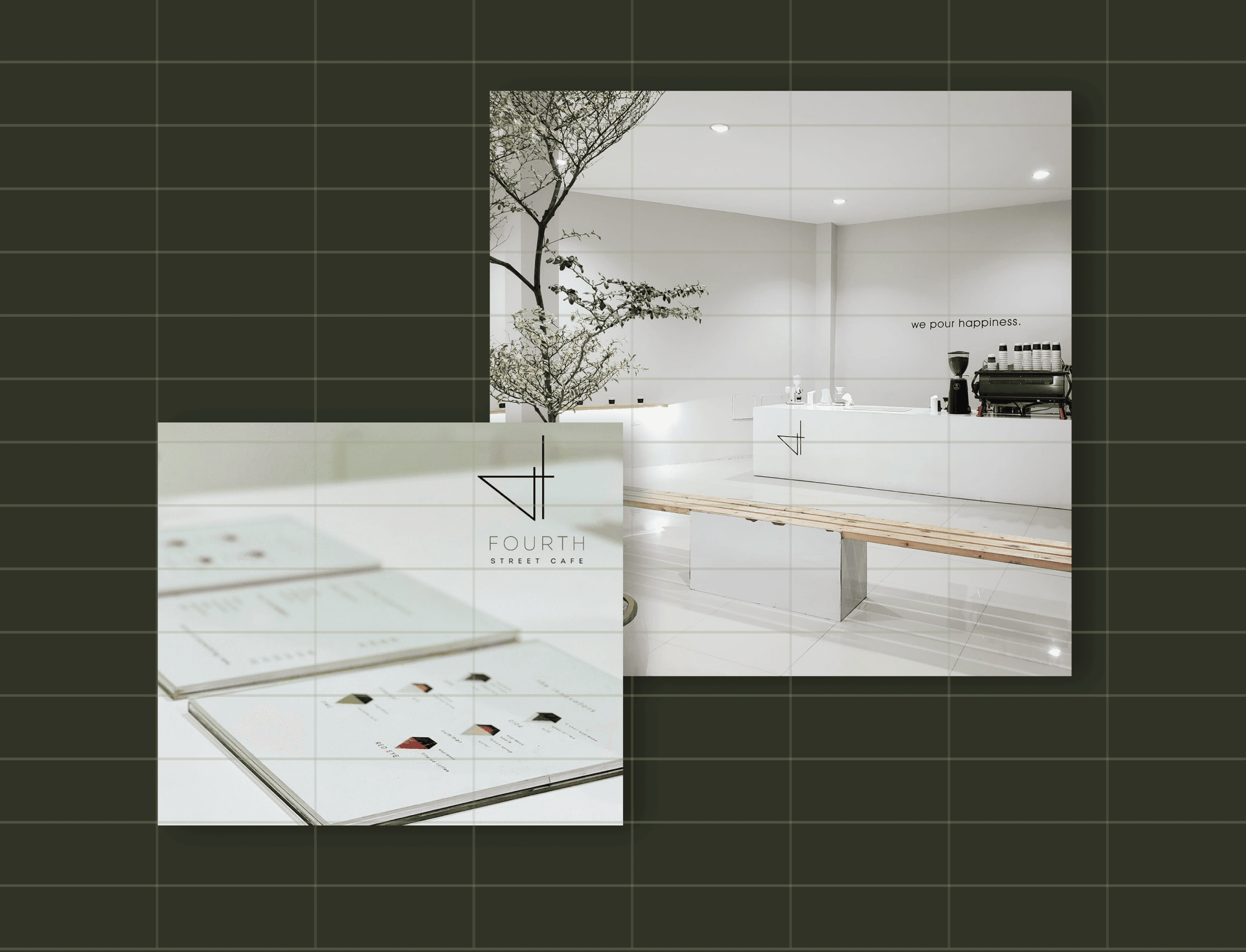
OBJECTIVES
To understand the internal problems faced by the baristas, as well as uncover the issues of the standard operating procedure within the service, the team wants to address the following:
the different pain points of the baristas during a shift and the possible scenarios.
the end-to-end journey of the baristas to carry out the service.
Uncover the baristas’ thought processes behind the standard operating procedure.
METHODOLOGY
Initial discussions with the owner shifted the focus to service over product. The team used design ethnography for an overview and conducted three in-depth interviews with the owner and baristas for deeper insights.
FINDINGS 1
Understaffed based on the demand for maintenance
FINDINGS 2
The owner also said that having no legitimate standard operating procedure or S.O.P. could also affect obligations.
FINDINGS 3
They expressed that as a two-person team, during peak hours, it has affected how they handle their responsibility outside the bar
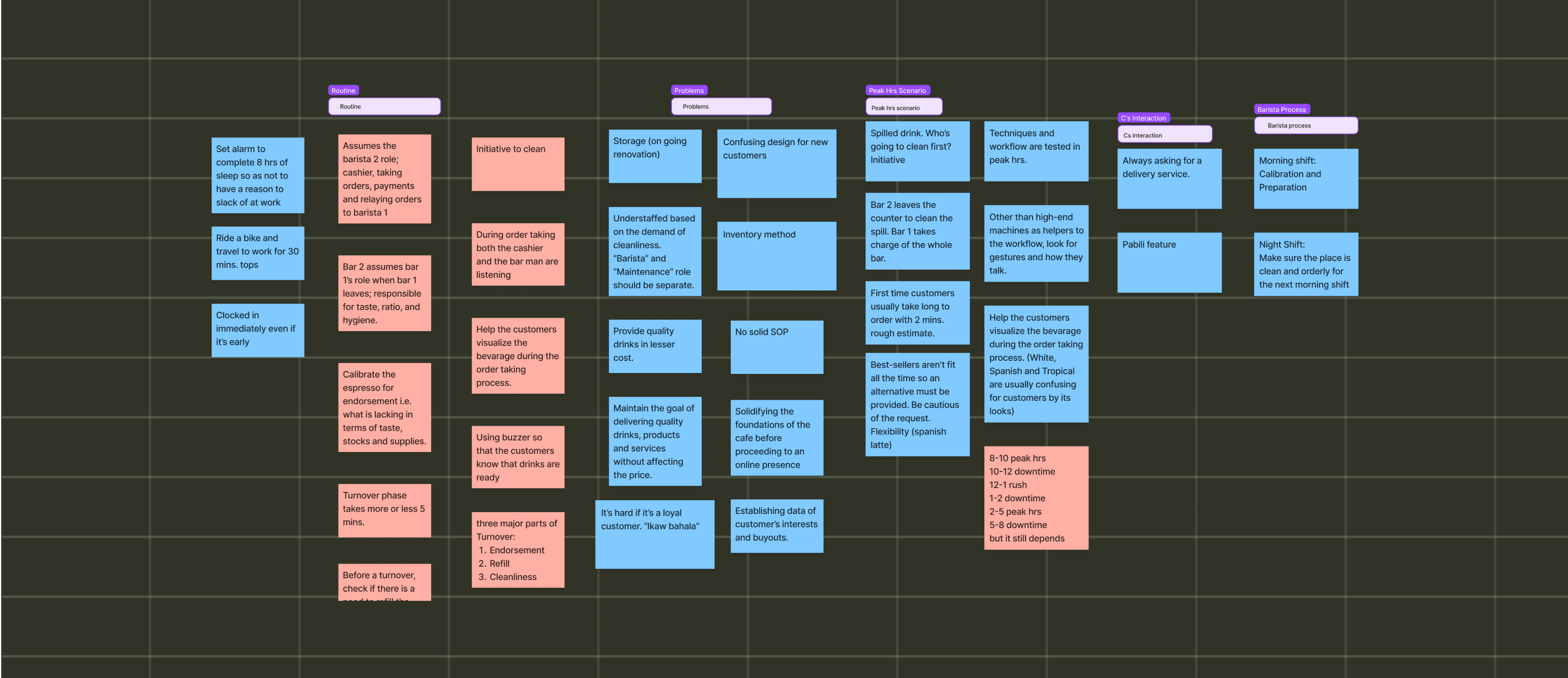
AFFINITY MAPPING
The insights gathered were put on sticky notes using FigJam. From there, the team started grouping the sticky notes on the affinity map to discover patterns and themes.
EMPLOYEE PERSONA
An employee persona is utilized to develop a profile to better grasp the service elements to be catered by the employees.

Age:
26
Hometown:
Davao City
Benchie is a career-oriented professional barista at a small coffeeshop. As much as possible, he likes to work in an orderly manner. He always looks out for his colleagues and helps them to troubleshoot.
Gain significant barista experience.
Learn the different aspects of running a coffeeshop.
Keep being employed.
Some customers does not seem to listen when explaining the menu.
Understaffed based on the demand of “maintenance.”
We need a method of inventory to follow.
JOBS-TO-BE-DONE
We need to be able to provide quality drinks, products and services without affecting its price.
TASK ANALYSIS
A task analysis is conveyed using FigJam to help visualize the path the baristas take to complete the service. The task analysis is focused on a two-person team, which is the usual set up to their work shift.
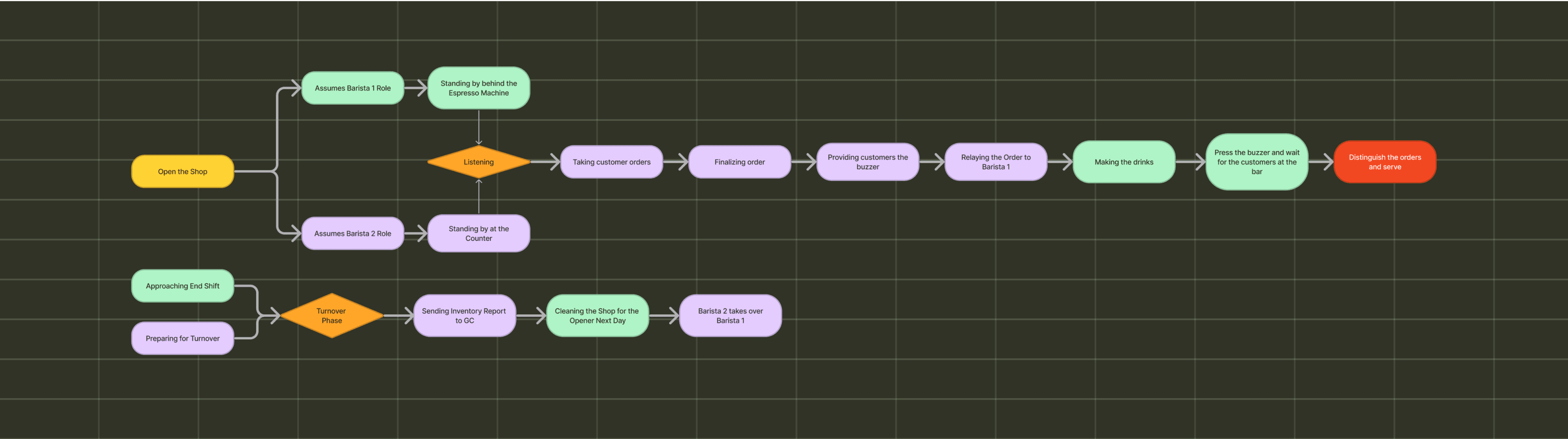
This simplified task analysis serves as a first step to legitimizing the standard operating procedure of the cafe. Based on the insights gathered from the interview, there are four crucial points in carrying out the service.
KEYPOINT 01
Knowing the corresponding responsibility per role.
KEYPOINT 02
During order-taking, Barista 1 should also be listening to the customer to gauge the portioning of ingredients in advance.
KEYPOINT 04
The Turnover Phase is a team effort that includes Taste Endorsement, Refilling of Stocks, Maintenance, and Sending Inventory reports.
EMPLOYEE SCENARIO
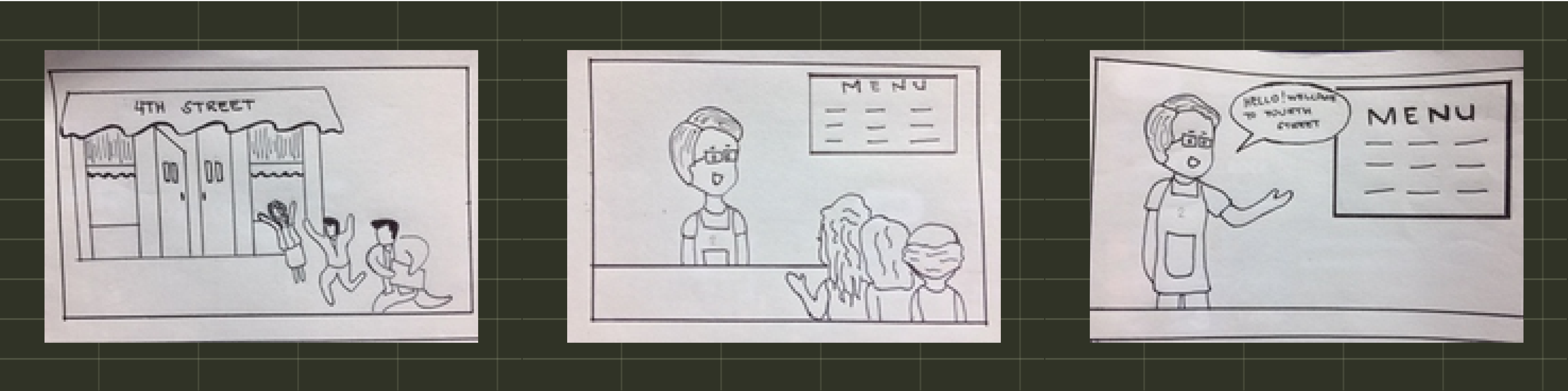
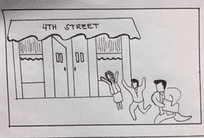
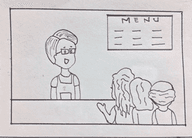
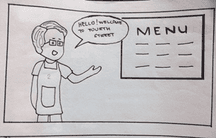
Employee Scenario is a vital step of the ideation process, which allows the team to lay a groundwork of actionable context for generating solutions. The slides below shows the importance of knowing the corresponding responsibility per role in order to carry out a succesful service.
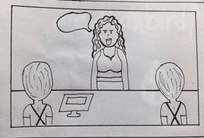
SCENE 1
4 P.M. rush hour.
SCENE 2
Customers come in.
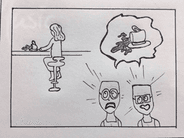
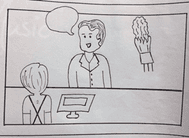
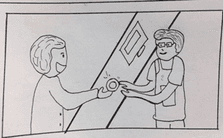
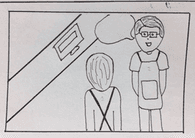
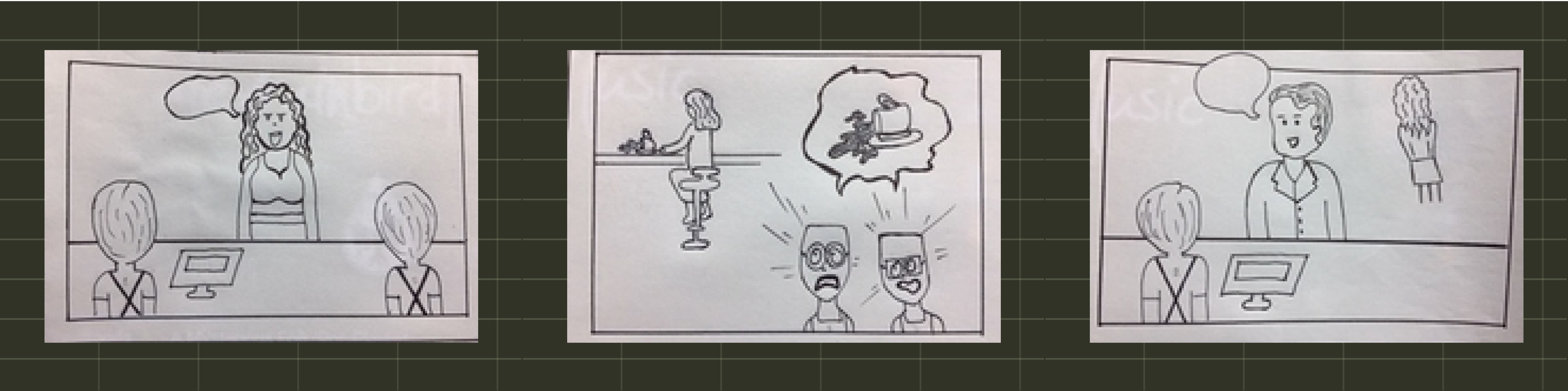
SCENE 5
A spilled drink caught the attention of the baristas.
SCENE 6
Bar 2 continues to cater the customers.

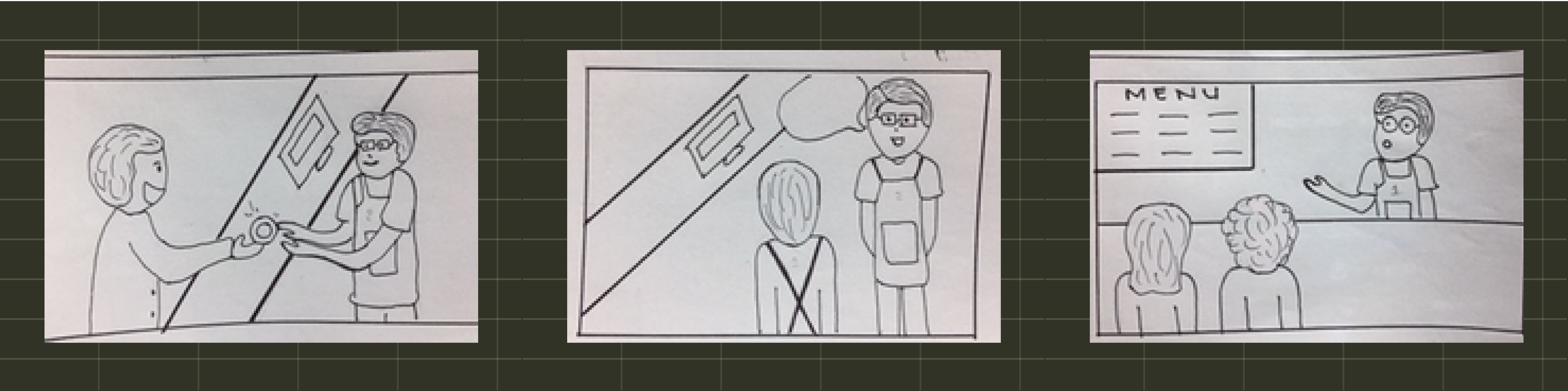
SCENE 7
Bar 2 finalizes the order and hands out the buzzer to the customers.
SCENE 8
Bar 2 notifies Bar 1 to take charge of the bar for a while before cleaning the mess.
To get a holistic understanding of the service, a service blueprint is created using Figma. The Service Blueprint provides the detail of standard operating procedure of the service that these baristas carry out.
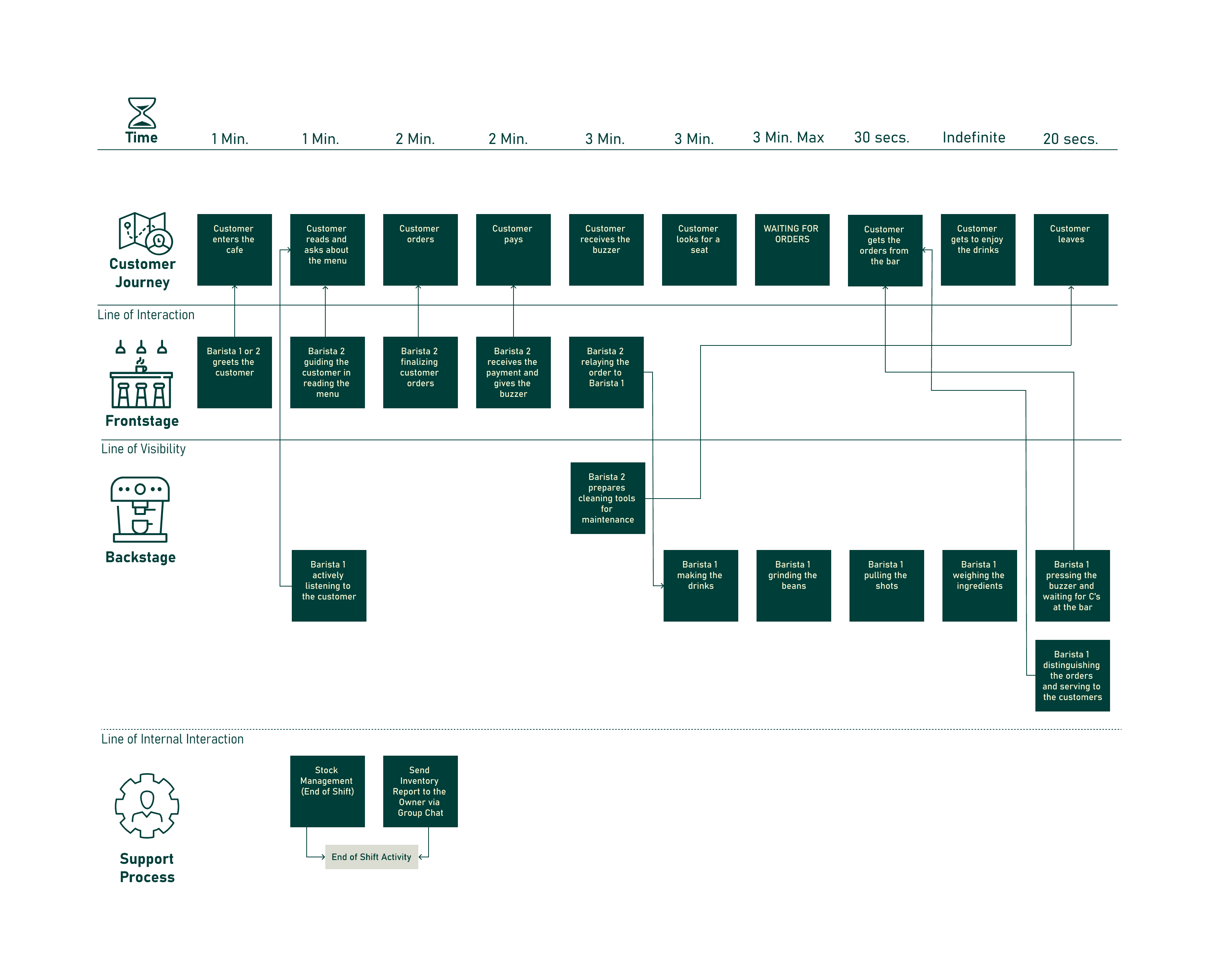
The diagram consists of five elements: Time, Customer Journey, Frontstage, Backstage, and Support Process. In this case, each row represents the five elements of service blueprinting that contain the tasks of stakeholders involved in the service. More importantly, some arrows indicate the relationships and dependencies. A single arrow suggests a one-way exchange, while the double arrow requires an agreement or team effort.
HYPOTHESIS
Based on this research, we can create a hypothesis that adding another staff for maintenance tasks and following a solid S.O.P. will significantly improve the workflow of the baristas because the responsibilities of baristas behind the bar are clear and will remain intact.
Exploring on employee’s pain points, thought processes and coming up with a solid S.O.P led the team into another step of Define phase, which is How-Might-We (HMW) statements. These statements will be the basis for future research directions.
evaluate the quality of service with it being guided by a clear standard operating procedure?
help to train the barristas in visualizing the menu for the customers?
How might we create a proper, yet simple method of doing inventory?
BUSINESS PLAN TAKES PRECEDENCE OVER ANY ACTION.
Coming in with a different problem, it is humbling how the owner takes careful steps to create a solid business foundation. The owner’s take defamiliarized and renewed how I view the process of making an app; stepping into an online presence is a massive step for a small business enterprise.
Let the research design process lead.
As a greenhorn in the sea of experience design, I would not have gauged how a business works and what problems need to be solved had I remained a customer. The issues that the owner wanted me to explore challenged me to be flexible. Thus, it allowed me to create a strategically meaningful body of knowledge that would support the foundation of the business.
Included in my works are my immersive design experiences and thought-processes.